What are your service areas?
The Durable Slate Company is a nationally available slate and historic roofing contractor. For the right project, we'll go
just about anywhere.
Our primary branches and warehouses are located throughout
Ohio and
Maryland alongside
field offices in the Midwest and Southern United States. Working as a team, we are able to offer our expertise everywhere you find historic roofs.
You're most likely to spot us working in Ohio, Pennsylvania,
Maryland, Virginia, West Virginia, North and South Carolina, Kentucky, Tennessee, Michigan, Indiana, and Illinois. We are also no strangers to international work.
Wherever you find historic roofs, you'll find The Durable Slate Company
ready for work.
Do you provide free estimates?
Yes! The Durable Slate Company provides free estimates for property owners, churches, public and private institutions as well as corporations.
A logistics cost may apply for estimates outside of the following areas: Ohio, Indiana, Michigan, Pennsylvania, Kentucky, West Virginia, Virginia, Washington D.C. and Maryland. A fee may be applied for buyers inspections, conditions assessments as well as consultations. Please call for more information.
Our estimators do not work on commission. Their recommendations are only for the betterment of your roof, not our bottom line. Durable estimators are experts and their work is thorough and detail oriented. If your roof requires repairs, they will provide an accurate description of the work required and expected costs.
And if repairs aren't needed, you get a little peace of mind knowing your roof has been checked by the best.
Do you offer a yearly maintenance program?
Yes! The Durable Slate Company offers an annual inspection program and we will keep track of the maintenance schedule for you. Once a year, we'll reach out to you to schedule your annual inspection. As typical, our estimators will carefully inspect your entire roofing system - slate or tile, flashings, and gutters. If everything is in good condition we will let you know. If any repairs are needed we will provide a written estimate.
Learn more about slate roof maintenance.
Do you clean slate roofs?
Yes! To remove pollution and organic growth, we provide power washing services for certain types of slate roofs. Pressure washing can damage softer slate types - such as
Pennsylvania Black slate.
Harder types of slate can be effectively cleaned by pressure washing with water. The Durable Slate Company does not use or recommend using any chemical products to clean slate.
Do you install gutter screens or shields?
The Durable Slate Company does not install any type of screen or gutter covering. Although these systems prevent debris from accumulating inside the gutter, leaves and other debris will accumulate on top of the covering instead. In heavy rain, water will slide off the debris, cascading towards the foundation of your home.
Instead, we recommend having your gutters cleaned on a regular schedule to clear debris before a clog can occur.
Can I make the repairs in phases based on my budget?
Yes, repairs can be done all at once or in phases. We provide written, itemized estimates for repairs. Our inspectors will let you know what repairs are needed immediately and also what repairs may be needed in the future so that you can plan or budget as needed.
I signed my contract. How do I get on the schedule?
Once you have signed a contract for roofing work, the project automatically goes on our schedule. Our production managers will contact you to give you an approximate time-frame for when to expect the project to start.
My roofing project is complete. How do I make payment?
When your project is complete you may give payment to the foreman, call the office to pay with a credit card by phone, or pay online by clicking the ‘
Pay Online’ button above.
How often should my slate or tile roof be inspected?
We recommend that owners of a slate or tile roof have it inspected on a yearly basis, or
after large wind or ice storms, to ensure that no pieces are broken or missing. In addition to inspecting the slate and tile it is a good idea to keep an eye on the metal flashings so that they can be replaced before the end of their service life. This prevents leaks and avoids the cost of interior leak repairs. Some of our homeowners have us come to inspect in the spring to make sure no repairs are needed after the harsh winter and some call us in the fall to button up the roof before snow and ice become an issue – this is personal preference.
Can my slate or tile roof be repaired or does it need to be replaced?
Broken or missing slate and tile does not indicate that you need a new roof. And while other roofing contractors might encourage you to fully replace your roof, this may not be necessary. The individual pieces of slate and tile can typically be replaced as needed to maintain the integrity of your roof. Our highly trained inspectors can assess the general condition of your roof and recommend needed repairs. If your historic roof is nearing the end of its service life,
contact us to arrange your free estimate. Our estimators will determine the best course of action as suits your roof.
My historic roof has storm damage. What do I do now?
The first thing to do is contact your insurance company and let them know about the damage. They will let you know what information you will need in order to make a claim.
Next, contact The Durable Slate Company to
schedule your roof inspection. We will provide you with a written, itemized estimate for repairs which can then be submitted to your insurance company. We have extensive experience working with insurance companies and we are happy to speak directly with your adjuster to answer any questions, or provide additional information or photos of the damage.
What causes a chimney to leak?
Chimney leaks are some of the most difficult leaks to diagnose. There are many reasons for chimney leaks, and it is not always possible to identify the specific leak by visual inspection only. Even when an estimator sees an obvious reason for a leak, there may also be hidden factors or causes.
Therefore, it may take several different remedies to completely repair the leak.
Visit "
Is Your Roof Leaking Around the Chimney?" for additional information.
How long does a slate or tile roof last?
Slate roofs can last anywhere from 75 to several hundred years depending on the type of slate on the roof and how well it has been maintained.
A
Pennsylvania Black slate roof typically has a life span of 75-100 years because it is a softer slate that flakes, or delaminates, over time. In contrast,
Virginia Buckingham is a very hard slate that can protect your home for 200 years or more.
Older slate roofs might have missing or askew slates. This is normal and these roofs are not necessarily at the end of their service life. Long-lasting slates can easily outlive the steel nails used to fasten them. After decades of wear, steel nails rust and break, causing the slate to shift position or slide out.
Our professionals can refasten these “slide outs” using copper nails utilizing a technique that makes the repair invisible.
A
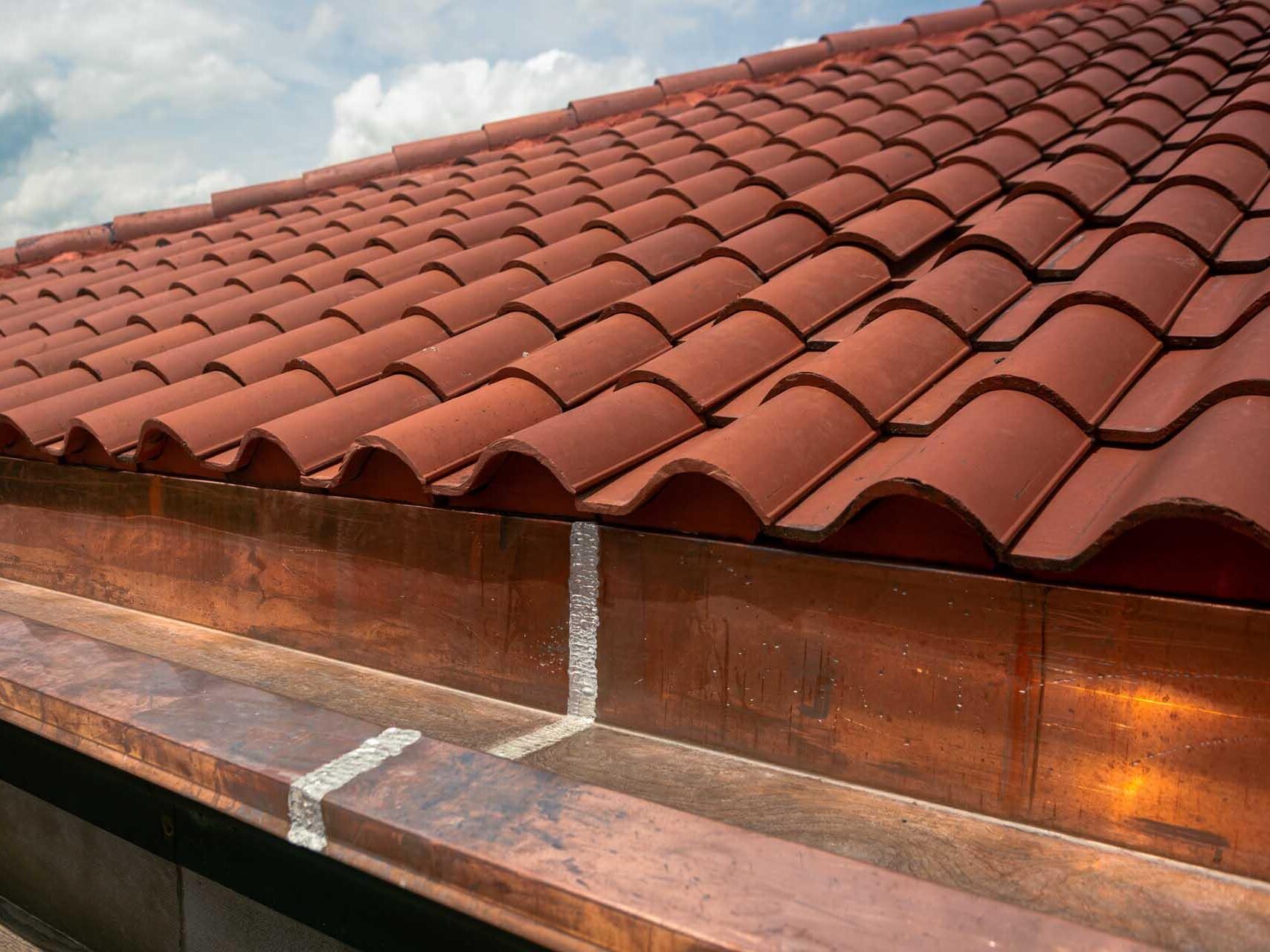
clay tile roof typically lasts 50 to 100 years or more, depending on several factors:
Quality of the tiles: High-grade, well-fired clay tiles can last over a century.
Installation quality: Proper underlayment, flashing, and ventilation are crucial to longevity.
Climate: Clay tiles perform best in warm, dry climates but can also last long in varied conditions if maintained.
Maintenance: Regular inspection for cracked tiles, moss buildup, and underlayment wear can extend the roof’s life.
Underlayment lifespan: While the tiles themselves may last 100 or more years, the underlayment usually needs replacement every 20–40 years.
I found slate fragments on the ground. What should I do?
You may periodically find pieces of slate on the ground around your home. Small pieces or chips are generally nothing to worry about – corners of the slates may break due to winter weather or debris falling on roof and aren’t likely to pose a leak issue.
Large pieces of slate found on the ground or in the gutter indicate that a repair may be needed. The Durable Slate Company recommends having your roof inspected annually to ensure the roof is in good condition and will continue to protect your home.
What are the black streaks on my slate roof?
You may have noticed that areas of your slate roof have become dirty or black streaks have developed. This is typically the result of air pollution and organic growth, such as algae or lichen. It does not affect the performance of your slate roof. While it can be unsightly, your slate roof is not damaged or in need of replacement. For harder slate type, power washing is an easy and effective solution to clean the slate. When appropriate, we are happy to provide this service to help you restore the beauty of your historic roof.
I’ve never owned a home with a slate roof before. What do I need to know?
Owning a home with a historic roof only requires a watchful eye and a trusted roofer.
The best thing that you can do to maintain your roof is to have it inspected annually, after any major storms, or if you notice any issues. The Durable Slate Company’s inspectors will look over the entire roofing system – slate/tile, flashings, and gutters – to find any broken pieces or potential leaks. If no repairs are needed, your roof is in good condition and no repairs are necessary. If there are immediate repairs, we will provide you with a written estimate that will also note any future repairs to consider. Proactive maintenance is the best way to avoid costly interior repairs from leaks or other damage.
What types of gutters do you work on?
We install
copper, paint grip and steel gutters regularly. We also can reline box or stop gutters in copper or steel. We do not use rubber or tar in lining gutters, however. We only work on aluminum gutters if the hanger needs to be installed under the slates. If they do not tie into the slates, we wouldn’t normally work on aluminum.
At this time we do not currently offer financing through our company for estimated work.
Do you offer discounts for military/ elderly/ unemployed/ etc?
At this time we do not offer any discounts for our work unless the customer is able to provide usable material. In that case we would credit back the customer for what was provided.
Do you remove salvaged slate or clay-tiles?
At this time we do not currently have a tear-off crew that is able to remove the material from your roof. Once removed, if you can provide a sample or send a picture of your material to our material manager, he would be happy to let you know of our interest. Please visit our
material reclamation page for more information.
How should I prepare my slate roof for winter?
As the weather begins to turn colder, it is important for homeowners to take steps to prepare their slate roof for the winter season. Not only will this help to prevent potential damage to the roof and the rest of the home, but it can also save homeowners money on costly repairs in the future. Please visit "
Prepare Your Slate Roof for Winter" for more information.
What should I consider when buying a new slate roof?
A new slate roof can be a complex and costly project, but with careful planning and the help of a skilled and experienced contractor such as The Durable Slate Company, it can be a long-lasting and attractive addition to your home. By considering
these ten factors and working with a reputable contractor, you can ensure that your new slate roof will provide many years of protection and enhance the appearance of your home.
What are some of the most common roofing styles?
When it comes to building or renovating a home or other structure, one of the most important decisions you will have to make is the type of roof you want to install. There are many different roofing styles to choose from, each with its own unique characteristics and benefits.
In this article, we explore some of the most common roofing styles, including gable roofs, hip roofs, flat roofs, mansard roofs, gambrel roofs, butterfly roofs, sawtooth roofs, saltbox roofs, and shed roofs.
What is roofing flashing?
Flashing stops water from infiltrating the joints and valleys in the roof, causing damage to the structure. It is important to properly install and maintain flashing so it to functions properly and protect the building from leak damage. Always choose a company that is licensed, insured, experienced, and has a good reputation. By taking the time to find a reliable contractor and by
properly maintaining the flashing on your roof, you can help your building stay in good condition for years to come.